September 17, 2026
Employee Handbook for Remote Employees: 10 Real Examples
Explore 10 public employee handbooks and remote-work resources, plus a practical structure and a way to use your handbook during onboarding.
By Jesse K.
A remote employee handbook gives people a reference for how your organization works: policies, responsibilities, communication, and where to get help. These ten public examples include handbooks, culture documents, and remote-work guides with different structures and purposes.
Use them for ideas, then have the relevant owners review your own policies and keep them current.
What Is A Good Structure For A Remote Employee Handbook?
Make it easy to find the information employees need. A useful structure includes:
- Company purpose and values, with examples of how they guide decisions.
- Roles, responsibilities, and where to ask for help.
- Communication practices and expectations for remote work.
- Time off, benefits, and employment policies.
- Security, equipment, and access procedures.
- Links to role-specific processes and training.
Give each section an owner and a review date. Keep the handbook as the reference, then introduce relevant sections during onboarding.
For example, send a short explanation of your customer escalation process in week two, link to the handbook section, and follow with a quiz on two practical scenarios. Review the answers to decide what needs further explanation.
What Are Good Examples Of Remote Employee Handbooks?
If you don't have an employee handbook, you may be wondering what types of information you should include in your remote employee handbook.
Here are 10 good examples of remote employee handbooks to help you get started.
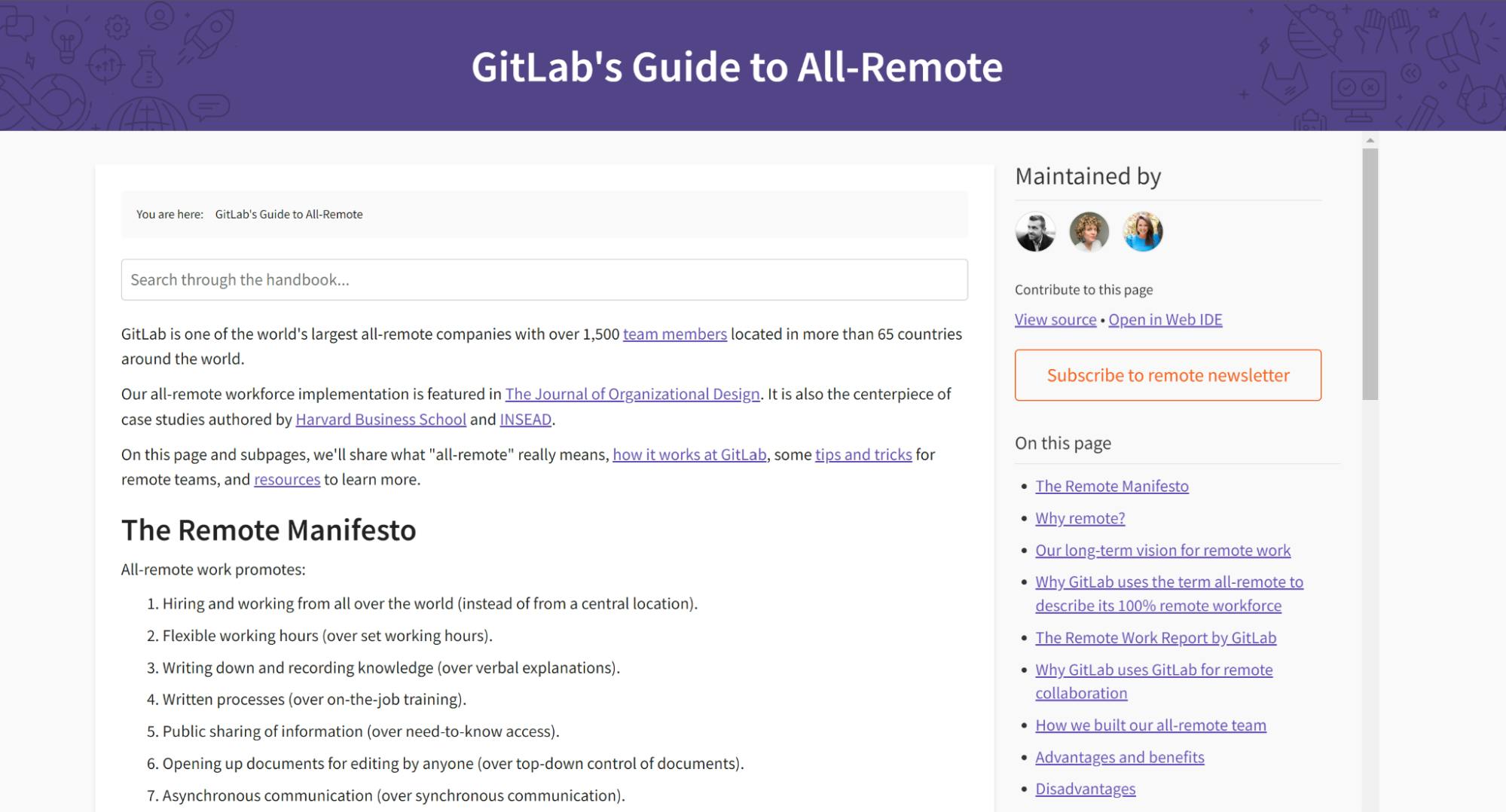
1. GitLab - Guide to All-Remote
Company: GitLab Inc.
Link: Guide to All-Remote
Excerpt from the Table of Content:
- The Remote Manifesto
- Why remote?
- Our long-term vision for remote work
- How we built our all-remote team
- Advantages and benefits
- Values
- Handbook-first documentation
One-sentence review:
GitLab's all-remote guide is useful for exploring how a handbook can explain working practices alongside company policies.
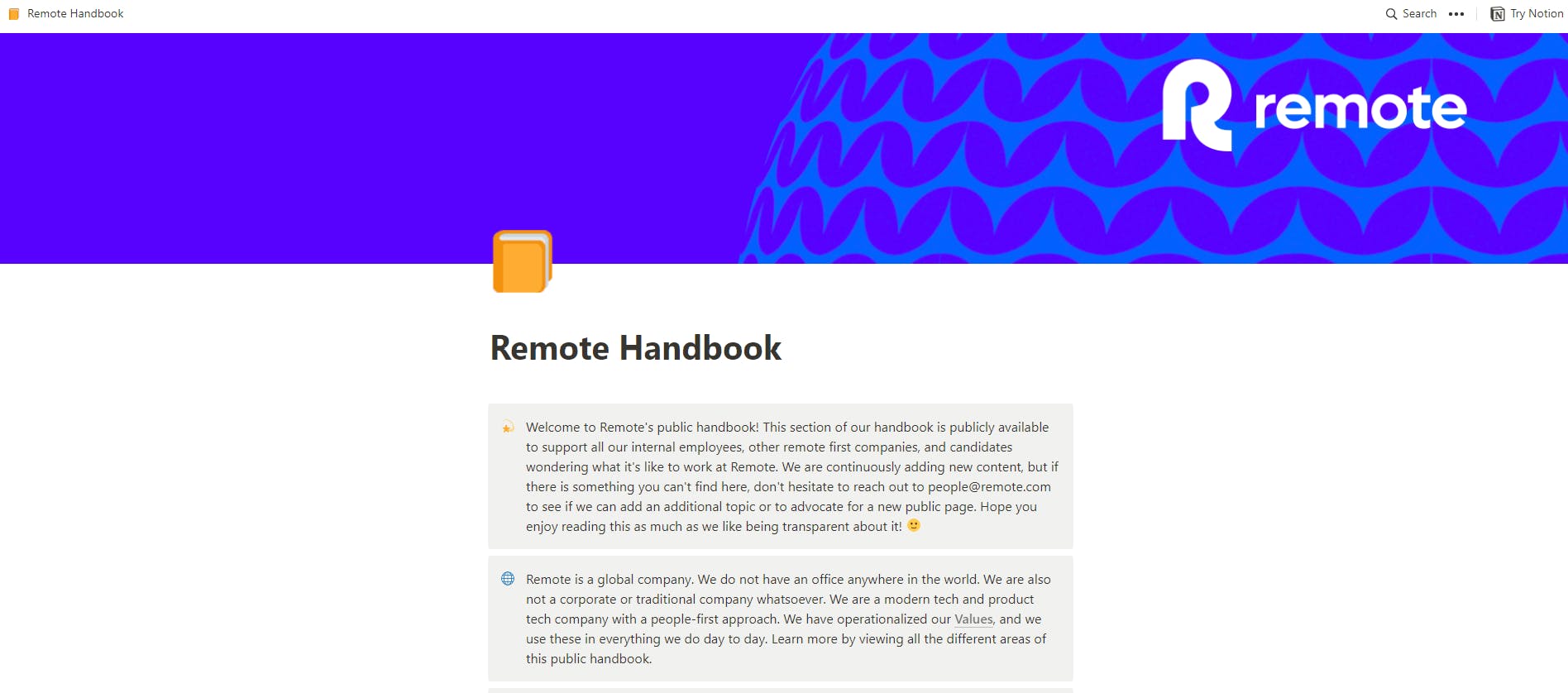
2. Remote.com - Remote Handbook
Company: Remote Technology, Inc.
Link: Remote Handbook
Excerpt from the Table of Content:
- Values & Expectations
- Culture of Documentation
- Timezones & Working Async
- Benefits & Perks
- Diversity, Equity & Inclusion
- Engineering Rulebook
- Onboarding Buddies
- Anti-Harassment Policy
One-sentence review:
Remote's handbook shows how to organize company expectations, working practices, and role-specific information in a shared reference.
3. Zapier - The Ultimate Guide to Remote Work

Company: Zapier Inc.
Link: The Ultimate Guide to Remote Work (PDF)
Excerpt from the Table of Content:
- How we work
- Remote Life
- Benefits & Perks
- Our Commitment to Applicants
- Culture and Values at Zapier
- Zapier Guide to Remote Work
- Zapier Code of Conduct
- Working On Diversity and Inclusivity
One-sentence review:
Zapier's guide combines advice on remote working with examples of communication and team practices.
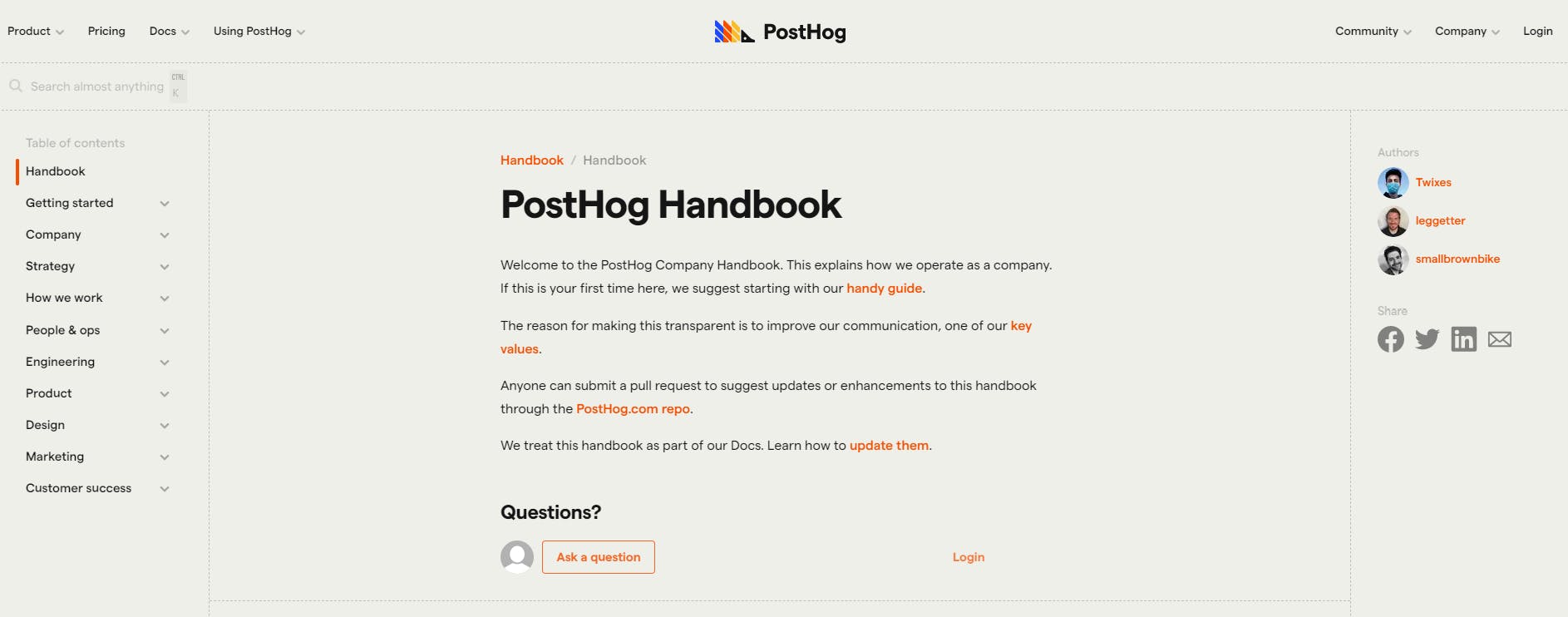
4. PostHog - Handbook
Company: PostHog, Inc.
Link: PostHog Handbook
Excerpt from the Table of Content:
- Why does PostHog exist?
- How we get users
- How we make money
- Enduringly low prices
- A wide company with small teams
- What we value
- Not running out of money
One-sentence review:
PostHog's handbook brings company strategy and day-to-day operating practices into the same reference.
5. Dropbox - Virtual First Toolkit

Company: Dropbox, Inc.
Link: Virtual First Toolkit
Excerpt from the Table of Content:
- Effectiveness Kit
- Teamwork Kit
- Communication Kit
- Well-being Kit
- Virtual First Manifesto
One-sentence review:
Dropbox's Virtual First toolkit uses practical exercises and guidance to explain remote collaboration.
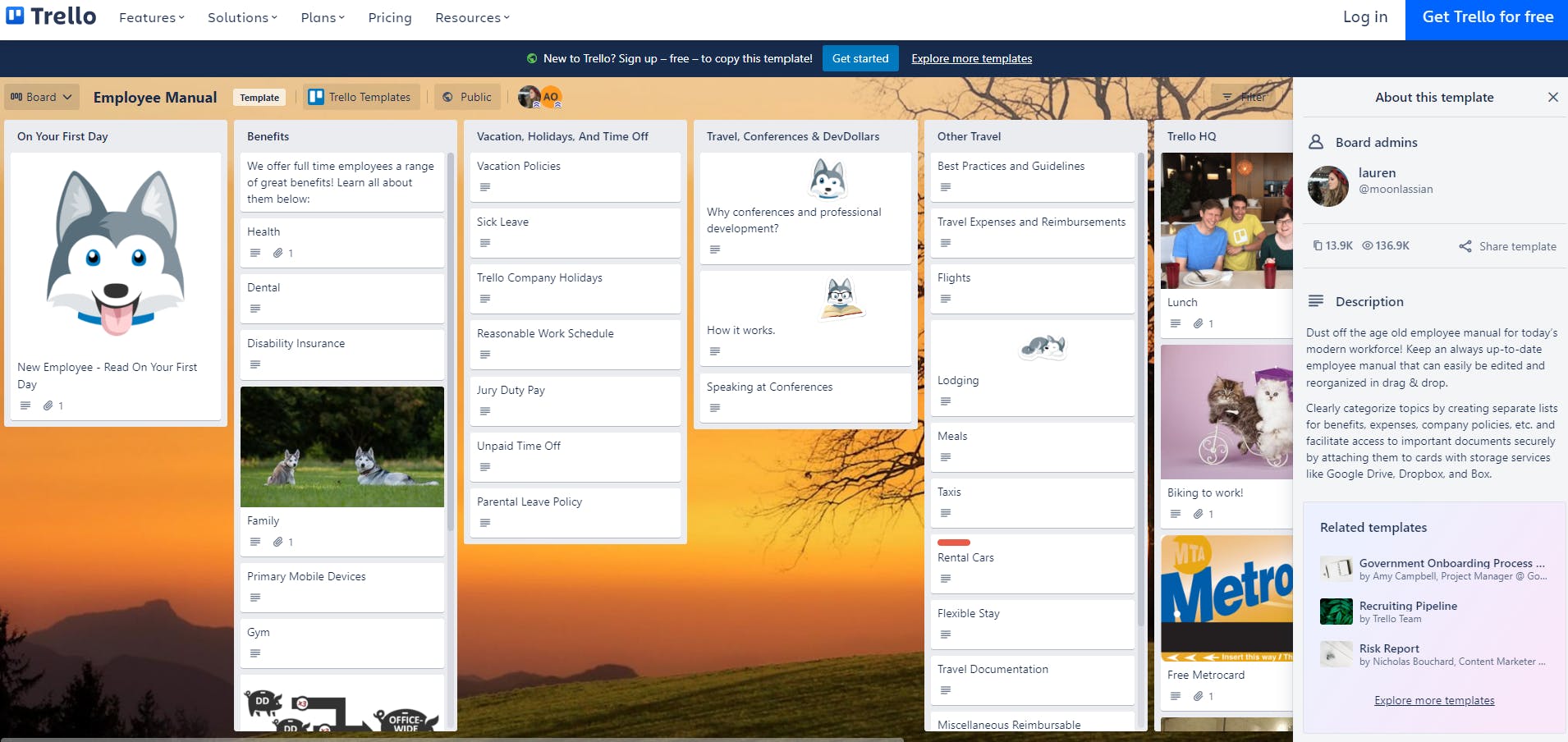
6. Trello - Employee Manual
Company: Trello inc. / Atlassian
Link: Employee Manual
Excerpt from the Table of Content:
- On Your First Day
- Benefits
- Vacations Holidays, And Time Off
- Working Remotely For Trello
- Sexual Harassment Policy
- 2FA All The Things
- Brand Book
One-sentence review:
Trello's employee manual uses cards and lists to organize information employees may need during onboarding.
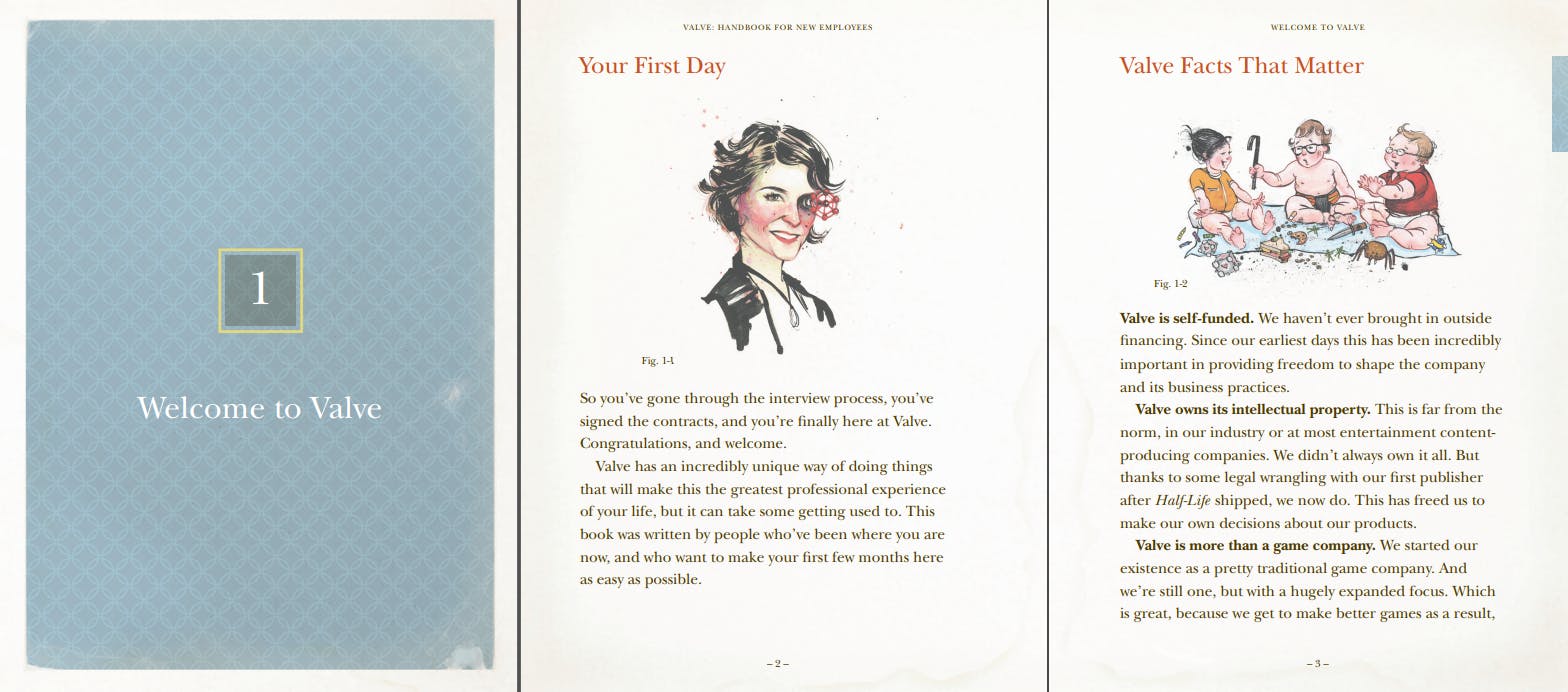
7. Valve - New Employee Handbook
Company: Valve Corporation
Link: New Employee Handbook (PDF)
Excerpt from the Table of Content:
- Welcome to Valve & Facts that Matter
- Your First Month
- Teams, Hours, and the Office
- Your Peers and Your Performance
- We Value "T-Shaped" People
- Where Will Your take Us
One-sentence review:
Valve's illustrated handbook offers an example of explaining an unusual organizational structure to new employees.
8. Meta - The Meta Code of Conduct

Company: Meta Platforms, Inc.
Link: The Meta Code of Conduct (PDF)
Excerpt from the Table of Content:
- Our principles are foundational to Meta
- Supporting each other
- Embrace diversity and inclusion
- Innovate responsibly
- Competing and Collaborating
- Engaging with the World
- Achieving our mission responsibly is everyone’s responsibility
One-sentence review:
Meta's Code of Conduct is an example of a formal reference for conduct, governance, and ethical decisions.
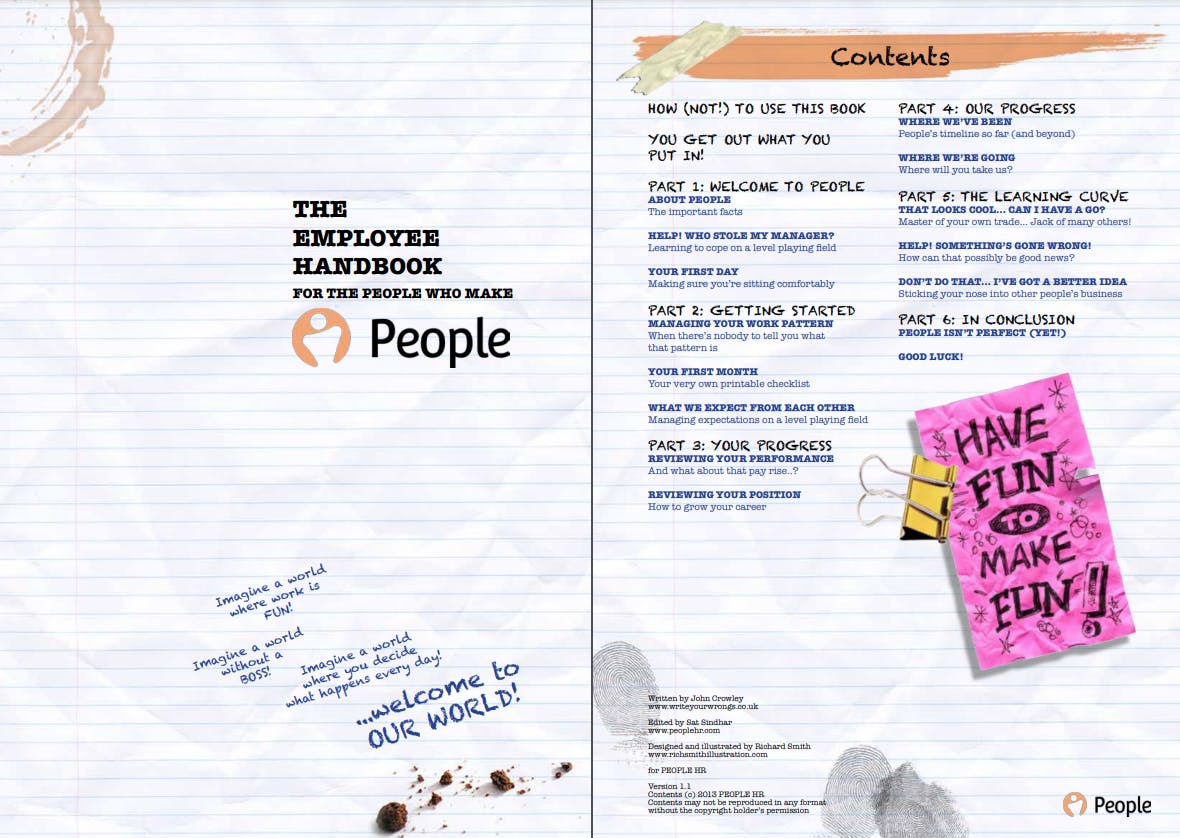
9. People HR - The Employee Handbook
Company: People HR
Link: The Employee Handbook (PDF)
Excerpt from the Table of Content:
- About People
- Your First Day
- Managing Your Work Pattern
- Reviewing Your Performance
- Where we're going
- The Learning Curve
One-sentence review:
The People HR example uses illustrations and a school theme to present information to new hires.
10. HubSpot - The HubSpot Culture Code

Company: HubSpot
Link: The HubSpot Culture Code
Excerpt from the Table of Content:
- What is culture
- HubSpot Culture Code Highlights
- Mission & Metrics
- We favor autonomy and accountability
- Results matter
- The best teams are diverse & inclusive teams
- We lean towards long-term impact
One-sentence review:
HubSpot's Culture Code uses a slide format to explain the company's values and working principles.
Frequently asked questions
What should a remote employee handbook include?
A remote employee handbook should cover your company's mission, values, and culture alongside practical policies for communication, time zones, and async work. Include sections on benefits, security, equipment, and legal requirements like NDAs or data protection. It should also explain how performance is reviewed and where employees can go for support. The goal is a single reference that answers the most common questions a remote hire would have in their first 90 days.
How long should a remote employee handbook be?
There is no ideal page count. Keep core policies concise, make common questions easy to find, and link to detailed procedures where needed. Test the structure with a new hire: can they find the answer without asking a colleague?
How is a remote employee handbook different from a regular one?
Include remote-work practices such as communication channels, response expectations, equipment, access, and working across time zones. Explain where employees should ask questions and which policies apply to their role and location.
Use the handbook after day one
Keep the handbook accessible and update it when a policy or process changes. During onboarding, introduce the sections a new hire needs for their next task and link back to the complete reference.
A short knowledge check can help you find material that needs more explanation. It records answers, rather than serving as a formal policy acknowledgment. The Slack onboarding guide shows how to organize those lessons across the first month.
Written by Jesse K.
The team behind Doozy. We write about onboarding, learning, and team engagement.